1. The Early Solar System:
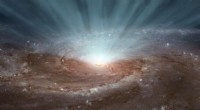
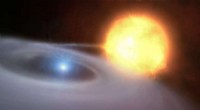
* The solar nebula: This is the giant cloud of gas and dust that gave birth to our solar system.
* Gravity pulls: Gravity caused the nebula to collapse inward, eventually forming the Sun at the center.
* Planetesimals: As the cloud collapsed, particles within it began to collide and stick together, forming small, rocky bodies called planetesimals.
2. Formation of Asteroids:
* Different regions: Planetesimals formed in different regions of the solar system, depending on the distance from the Sun.
* Asteroid belt: In the region between Mars and Jupiter, planetesimals were prevented from coalescing into a larger planet due to Jupiter's powerful gravitational influence.
* Collisions and accretion: These planetesimals continued to collide and accrete, forming the asteroids we see today. Some asteroids are likely the remnants of failed planetary embryos.
3. Diverse Asteroid Types:
* Composition: Asteroids come in a variety of compositions, ranging from rocky and metallic to carbonaceous.
* Types: The composition of an asteroid depends on where it formed in the solar system:
* Main Belt Asteroids: The most common type, found in the asteroid belt between Mars and Jupiter.
* Near-Earth Asteroids: Asteroids that come close to Earth's orbit.
* Trojan Asteroids: Asteroids trapped in Jupiter's Lagrange points, ahead of and behind the planet.
4. Continued Evolution:
* Collisions: Asteroids continue to collide with each other, sometimes breaking apart or forming larger objects.
* Evolution of composition: These collisions can also affect their surface composition and internal structure.
In summary: Asteroids are the leftover building blocks from the formation of the solar system. They formed in the early solar nebula from planetesimals that failed to coalesce into a planet due to gravitational influences like Jupiter. They are diverse in their composition and continue to evolve through collisions and other processes.