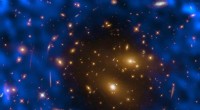
* Intrinsic Brightness: Stars come in different sizes and temperatures. A large, hot star emits far more light than a small, cool one. This intrinsic brightness is called luminosity.
* Apparent Brightness: What we see is called apparent brightness. This is how bright a star *appears* from Earth, which is influenced by both luminosity and distance.
* Inverse Square Law: The apparent brightness of a star decreases with the square of its distance from Earth. So, if a star is twice as far away, it appears four times dimmer.
Think of it this way:
* A small, close star could appear brighter than a large, distant one.
* A very luminous star could be seen from incredibly far away, even if it's much farther than a less luminous star that appears brighter nearby.
To summarize:
* Distance: Closer stars appear brighter.
* Luminosity: Stars with higher luminosity (inherent brightness) appear brighter, regardless of distance.
So, while distance is a major factor, a star's inherent brightness plays a crucial role in how it appears to us on Earth.