1. The Protoplanetary Disk:
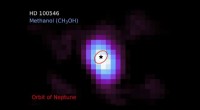
- After the Sun ignited, a vast disk of gas and dust, known as the protoplanetary disk, remained around it.
- This disk contained elements like hydrogen, helium, and heavier elements like rock and ice.
2. Accretion:
- Tiny dust particles in the disk began to clump together due to electrostatic forces.
- These clumps grew larger by attracting more particles, forming planetesimals.
- As planetesimals collided and merged, they grew even bigger.
3. Gas Capture:
- Jupiter's immense gravity attracted a massive amount of gas from the surrounding protoplanetary disk, primarily hydrogen and helium.
- This rapid gas capture led to its colossal size.
4. Migration:
- Jupiter's gravitational influence likely caused the protoplanetary disk to shift, pushing it further away from the Sun.
- This movement resulted in Jupiter's current location in the outer solar system.
5. Ongoing Evolution:
- Even today, Jupiter continues to experience subtle changes as it attracts particles and gas from the surrounding space.
Key Factors in Jupiter's Formation:
* Early Gas Abundance: The protoplanetary disk contained vast amounts of gas, allowing Jupiter to grow to its enormous size.
* Gravitational Pull: Jupiter's immense gravity played a crucial role in attracting and capturing gas and dust.
* Distance from the Sun: Jupiter's location in the outer solar system allowed it to retain its gaseous composition, as the Sun's heat wouldn't have evaporated it.
While this explains the general process of Jupiter's formation, specific details remain under study. Astronomers continue to investigate the exact conditions that led to its unique characteristics and position in the solar system.