Here's how it works:
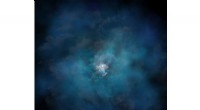
* Solar Nebula: The solar system began as a vast cloud of gas and dust called the solar nebula.
* Accretion: Over millions of years, particles in the nebula clumped together through gravity, forming planetesimals.
* Planetesimals: These planetesimals continued to collide and merge, eventually forming the planets, including Earth and the moon.
* Simultaneous Formation: According to the co-formation theory, Earth and the moon formed at roughly the same time from the same disk of material within the solar nebula.
Key Points of the Co-formation Theory:
* Similar Composition: The Earth and moon share some similarities in their composition, which supports the idea of a common origin.
* Early Solar System Dynamics: The chaotic environment of the early solar system would have made it possible for Earth and the moon to form simultaneously.
Note: While the co-formation theory is a plausible explanation, there are alternative theories like the Giant Impact Hypothesis that suggests the moon formed from a collision between Earth and a Mars-sized object. The exact details of the moon's origin are still debated within the scientific community.