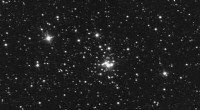
* Gravity's Pull: Every object in the universe, including stars, has gravity. Gravity is a force of attraction that pulls objects towards each other. The more massive an object, the stronger its gravitational pull.
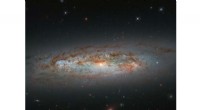
* Galaxies as Gravitational Wells: Galaxies are massive collections of stars, gas, dust, and dark matter. This vast amount of matter creates a strong gravitational field, acting like a giant well that traps everything within it.
* Stars in Orbit: Stars within a galaxy are constantly moving, but their motion is influenced by the galaxy's gravity. They are essentially orbiting the galactic center, much like planets orbit the sun.
* Balancing Act: The stars' orbital speed and the galaxy's gravitational pull create a balance. The stars are moving fast enough to avoid falling into the galactic center, but not so fast that they escape the galaxy's grasp.
Think of it this way:
Imagine a ball being thrown into a bowl. The ball will eventually fall to the bottom due to gravity. However, if the ball is thrown with enough force, it will constantly circle around the bottom of the bowl, never quite falling out. The bowl acts like the galaxy's gravity, and the ball is like a star.
Additional Factors:
* Dark Matter: While gravity is the primary force, dark matter, an invisible substance that makes up a significant portion of a galaxy's mass, also plays a role in holding stars within the galaxy.
* Galaxy Rotation: Galaxies are not static; they rotate. This rotation contributes to the gravitational force that keeps stars in their place.
In essence, stars stay in galaxies because they are trapped within the galaxy's powerful gravitational field, constantly moving in orbits around the galactic center.