Major Components:
* Oxygen (O): About 43% of the Moon's mass is oxygen, primarily bound in minerals like silicates.
* Silicon (Si): Makes up around 20% of the Moon's mass.
* Iron (Fe): Constitutes roughly 14% of the Moon's mass, found in both the core and as oxides in the crust.
* Magnesium (Mg): About 13% of the Moon's mass.
* Calcium (Ca): Approximately 3% of the Moon's mass.
* Aluminum (Al): About 3% of the Moon's mass.
Other Elements:
In addition to these major components, the Moon also contains trace amounts of various other elements, including:
* Sodium (Na)
* Potassium (K)
* Titanium (Ti)
* Chromium (Cr)
* Manganese (Mn)
* Phosphorus (P)
* Sulfur (S)
* Hydrogen (H)
* Helium (He)
* Neon (Ne)
* Argon (Ar)
Compositional Variations:
The Moon's composition varies across its surface. Here are some key points:
* Lunar Highlands: These older, heavily cratered regions are dominated by anorthosite, a light-colored rock rich in calcium and aluminum.
* Lunar Maria: These vast, dark plains are filled with basalt, a darker, denser rock rich in iron, magnesium, and titanium.
* Lunar Poles: These regions are known to contain significant quantities of water ice, which may be a valuable resource for future lunar exploration.
Understanding the Moon's Composition:
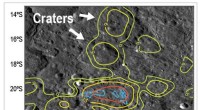
Studying the composition of the Moon is crucial for understanding its formation, evolution, and potential resources. Scientists analyze lunar samples brought back by missions like Apollo and use remote sensing techniques to learn more about the Moon's composition.
Key Points:
* The Moon is primarily composed of rock and dust.
* Oxygen, silicon, iron, magnesium, calcium, and aluminum are the most abundant elements.
* Compositional variations exist across the Moon's surface.
* Understanding the Moon's composition is vital for our understanding of its origin and potential resources.