Here's a breakdown of their key characteristics:
Origin:
* The exact sources of cosmic rays are still being investigated, but we know they come from various sources, including:
* Supernovae: Exploding stars
* Active galactic nuclei (AGN): Supermassive black holes at the centers of galaxies
* Solar flares: Eruptions from the Sun
* Other galactic and extragalactic sources: Some cosmic rays may even originate from outside our own galaxy.
Types:
* Primary cosmic rays: The original particles that enter Earth's atmosphere.
* Secondary cosmic rays: Particles created when primary cosmic rays collide with atoms in the atmosphere. These include muons, pions, and neutrons.
Energy:
* Cosmic rays have an incredibly wide range of energies, from a few MeV (mega-electron volts) to EeV (exa-electron volts), which is a billion times the energy of the most powerful particle accelerators on Earth.
Effects:
* Atmosphere: Cosmic rays continuously bombard Earth's atmosphere, causing air showers of secondary particles.
* Living organisms: Cosmic rays can be harmful to living organisms, particularly at high altitudes and during space travel.
* Science: Studying cosmic rays helps scientists understand the processes that occur in distant astronomical objects and the nature of the universe.
Detection:
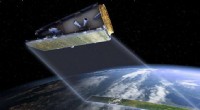
* Cosmic rays are detected using specialized detectors located on Earth's surface and in space.
* These detectors can measure the energy, direction, and composition of cosmic rays.
Interesting Facts:
* The most energetic cosmic rays observed have energies equivalent to a baseball traveling at over 60 miles per second.
* Cosmic rays contribute to the natural background radiation that we are exposed to on Earth.
* The study of cosmic rays is a key area of research in astrophysics and particle physics.
Overall, cosmic rays are an intriguing and powerful phenomenon that helps us understand the universe and its mysteries.