Here's a breakdown:
The Outer Planets:
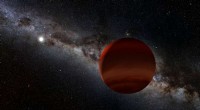
* Giant Gas Planets: Jupiter, Saturn, Uranus, and Neptune are considered giant gas planets. They are primarily composed of hydrogen and helium, which are indeed light gases.
* The Difference: The outer planets are much further from the sun than the inner planets (Mercury, Venus, Earth, Mars). This means they experience much less intense solar radiation.
Losing Light Gases:
* Solar Wind: The sun constantly emits a stream of charged particles called the solar wind. This wind can strip away a planet's atmosphere over time, particularly lighter elements like hydrogen and helium. This is more prominent for planets with weaker gravitational fields.
* Escape Velocity: For a gas to escape a planet's atmosphere, it needs to reach escape velocity, which is the minimum speed required to overcome the planet's gravity. Lighter gases can escape easier due to their lower mass.
* Planetary Formation: During the early formation of the solar system, planets were constantly bombarded by particles and debris. This could have stripped away some light gases, particularly in the outer regions where gravity was weaker.
So, Did the Outer Planets Lose Light Gases?
* Yes, to a certain extent: The outer planets likely lost some light gases during their formation and over time due to solar wind and escape velocity.
* But they still retain vast amounts: The giant gas planets hold enormous amounts of hydrogen and helium. They have strong gravitational fields and are far from the sun, mitigating the effects of solar wind.
In Conclusion:
The outer planets did experience some loss of light gases, but their immense gravity and distance from the sun allow them to retain a significant portion of their original atmospheres. They remain primarily composed of hydrogen and helium, hence their designation as "gas giants."