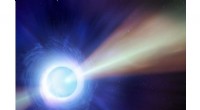
1. Supermassive Black Holes: Most galaxies, including our own Milky Way, have a supermassive black hole at their center. These behemoths are millions to billions of times more massive than our Sun. While black holes themselves are invisible, the immense gravity they exert attracts massive amounts of gas and dust. As this material spirals inwards, it heats up to incredibly high temperatures, releasing vast amounts of energy in the form of light and radiation. This process creates an intensely bright region known as an active galactic nucleus (AGN).
2. Dense Star Clusters: The galactic center is also home to a dense concentration of stars, much denser than in the galactic disk. These stars are packed together tightly, leading to frequent stellar interactions and collisions. These events can trigger powerful bursts of light and energy, contributing to the overall brightness.
3. Star Formation: The intense gravitational pull of the galactic center and the abundance of gas and dust make it a hotbed of star formation. Newly born stars are extremely hot and luminous, adding to the center's brightness.
4. Interstellar Dust: While dust can obscure light, it can also scatter and reflect it, creating a diffuse glow that contributes to the overall brightness of the galactic center.
5. Cosmic Rays: The galactic center is also a source of high-energy particles known as cosmic rays. These particles interact with the interstellar medium, producing light and radiation that contribute to the brightness.
6. The "Bulge": Many galaxies, including ours, have a central bulge of older, redder stars that contribute to the overall brightness.
In summary: The intense brightness of a galaxy's center is a result of a complex interplay of factors, including supermassive black holes, dense star clusters, active star formation, and the scattering of light by interstellar dust.