* Constant Change: Even the most ancient objects in our solar system have undergone some level of change over billions of years. They've been bombarded by asteroids, exposed to radiation, and affected by the solar wind.
* Internal Evolution: Even if the exterior of a celestial body remains relatively unchanged, its internal structure and composition can evolve over time through processes like radioactive decay and differentiation.
However, we do have objects that are considered remarkably "primitive" and hold clues about the early solar system. Here are some examples:
* Primitive Asteroids: Some asteroids, particularly those in the outer asteroid belt, are thought to be relatively unchanged since their formation. These are often referred to as "C-type" asteroids and are rich in carbon, water ice, and other volatile compounds.
* Cometary Nuclei: Comets, especially those from the Oort Cloud, are considered to be remnants from the very early solar system. They are icy and contain a mix of volatile and non-volatile compounds, likely representing the original composition of the protoplanetary disk.
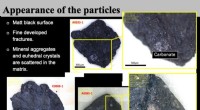
* Meteorites: Certain types of meteorites, like carbonaceous chondrites, are believed to be fragments of early asteroids that have remained largely untouched. They contain chondrules, tiny, glassy spheres formed in the solar nebula, providing insights into the conditions and processes of the early solar system.
Important Notes:
* Challenges of Studying Early Solar System Objects: These primitive objects are difficult to study directly. They are often located far away, and retrieving samples can be challenging.
* Interpretations and Evidence: We rely on indirect evidence like spectroscopic analysis, computer models, and the study of meteorites to infer the composition and evolution of these primitive objects.
Overall, while it's inaccurate to say we have "unchanged fragments," these primitive objects provide valuable clues about the early solar system's composition, formation, and evolution.