Surface Evidence:
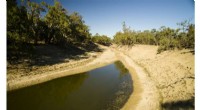
* Dried-up riverbeds and lakebeds: Images from Mars rovers and orbiters show extensive networks of channels and dried-up riverbeds, indicating the flow of liquid water in the past. These channels are often very large, suggesting massive floods.
* Mineral deposits: Minerals like gypsum and hematite, which typically form in the presence of water, have been found on the Martian surface. This indicates that water once existed in liquid form for extended periods.
* Evidence of ancient oceans: There's evidence suggesting the existence of a vast ancient ocean in Mars' northern hemisphere, possibly spanning a significant portion of the planet. This is based on the presence of flat plains with characteristic features that resemble ocean floors.
* Polar ice caps: The polar ice caps on Mars are composed mostly of frozen water, indicating that the planet holds a significant amount of water in a frozen state.
Martian Meteorites:
* Hydrated minerals: Martian meteorites, which are pieces of Mars ejected into space, contain hydrated minerals, indicating the presence of water in their formation.
* Isotopic analysis: Analysis of the isotopic composition of water in these meteorites suggests a close match to the composition of Earth's water, indicating a possible common origin.
Other Clues:
* Atmospheric composition: While the current Martian atmosphere is very thin and dry, it contains traces of water vapor, suggesting that the planet has lost a significant amount of water over time.
* Climate modeling: Climate models suggest that early Mars could have had a thicker atmosphere and a warmer climate, allowing liquid water to exist on its surface.
What happened to the water?
While scientists have a strong understanding that Mars was once wetter, the exact reasons for its transformation to a dry planet are still being investigated. However, the leading theories include:
* Loss of atmosphere: Due to Mars' weak gravity and lack of a global magnetic field, its atmosphere has been slowly stripped away by solar wind, leading to the evaporation of surface water.
* Solar wind interaction: The solar wind can interact with the Martian atmosphere, causing water molecules to break down and escape into space.
* Changes in volcanic activity: Early Martian volcanic activity might have released gases that contributed to the greenhouse effect, warming the planet and allowing for liquid water. As volcanic activity decreased, the greenhouse effect diminished, leading to colder temperatures and water freezing or evaporating.
Overall, the evidence strongly suggests that Mars was once a much wetter planet than it is today. While the exact details of its transformation are still being studied, the clues provided by its surface features, meteorites, and atmospheric composition offer a glimpse into the planet's fascinating history.