1. Fusion in the Core:
* During their lifetime, massive stars fuse lighter elements into heavier ones in their cores, like hydrogen into helium, helium into carbon, and so on.
* This fusion process releases immense energy, which is what makes them shine so brightly.
2. Iron Build-up:
* Eventually, the core of a massive star reaches a point where it's primarily made of iron. Iron is the heaviest element that can be created through fusion, and the process actually *absorbs* energy instead of releasing it.
3. Core Collapse:
* Without the outward pressure of fusion, the core of the star begins to collapse under its own gravity.
* This collapse is incredibly rapid, reaching speeds of up to 70,000 kilometers per second.
4. Supernova Explosion:
* As the core collapses, it becomes incredibly dense.
* The infalling material bounces off this dense core, creating a shock wave that travels outwards through the star.
* This shock wave blasts the star's outer layers into space at incredible speeds, creating a brilliant supernova explosion.
5. Remnant:
* After the supernova explosion, what remains of the star's core depends on its initial mass.
* Stars with 8-25 times the mass of the sun leave behind a neutron star, a incredibly dense object made almost entirely of neutrons.
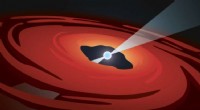
* Stars with more than 25 times the mass of the sun leave behind a black hole, a region of spacetime where gravity is so strong that nothing, not even light, can escape.
Supernovae are incredibly powerful events:
* They can outshine entire galaxies for a brief time.
* They release vast amounts of energy and create heavy elements that are scattered throughout the universe.
* These elements are essential for the formation of planets, stars, and even life.
In short, the death of a massive star is a spectacular and destructive event that leaves behind a dense, compact object and enriches the universe with heavy elements.