Home
Chemistry
Astronomy
Energy
Nature
Biology
Physics
Electronics
Science
>>
Science Discoveries
> >>
Astronomy
Earth's Orbital Period: Understanding the Length of a Year
It takes the Earth
approximately 365.25 days
to rotate around the sun. This is why we have a year.
The extra .25 days is why we have a leap year every four years.
Does the Sun Orbit the Milky Way? Understanding Solar System Motion
The Sun and Nuclear Fusion: Understanding the Energy Source
Astronomy
Young Galaxy ALESS 073.1 Challenges Conventional Formation Models
Supernova-Ready Stars Host Exoplanets: New Insights into Planet Formation Around Massive Stars
DECam Reveals Stunning, High-Resolution Image of the Southern Pinwheel Galaxy (Messier 83)
Science Discoveries
NASA‑NOAA’s Suomi NPP Satellite Tracks Dissipation of Tropical Storm Noul Over Laos
Correcting Calls: MLB’s Instant Replay and What It Means for Everyone
How Long-Term Fire Suppression Fueled Today’s Western Megafires
Science Discoveries
Chemistry
Astronomy
Energy
Nature
Biology
Physics
Electronics
Geology
Solar Eclipse
Math
other
Nanotechnology
Astronomy
New U.S. Weather Satellite Issue May Impact Image Quality – Updated Status
How Saturn’s Moons Keep Its A Ring in Place
Titan’s Extended Winter Polar Vortices: New Findings Reveal Unexpected Atmospheric Dynamics
Brazilian Solar‑T Instrument to Join International Space Station for Solar Flare Monitoring
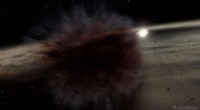
NASA Detects Massive Debris Cloud from Celestial Collision
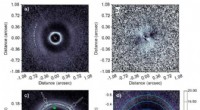
New Study Illuminates the Structure of HD 169142's Protoplanetary Disk
|
Geology
|
Math
|
Solar Eclipse
Science Discoveries © www.scienceaq.com