Atmosphere:
* Giant Red Spot: This iconic feature is a massive, persistent storm larger than Earth. It's been raging for centuries and is a testament to Jupiter's powerful atmospheric circulation.
* Bands and Zones: Jupiter's atmosphere exhibits alternating bands of light and dark colors, known as zones and belts. The lighter zones are regions of rising gas, while the darker belts are areas of descending gas. These bands are caused by differences in temperature, pressure, and composition.
* Great White Oval: Jupiter is also home to a powerful anticyclonic storm known as the Great White Oval. This storm is a much more recent phenomenon compared to the Great Red Spot.
* Lightning: Jupiter experiences intense lightning storms, far more powerful than those on Earth.
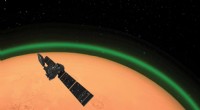
* Auroras: Like Earth, Jupiter has auroras, although they are significantly larger and more powerful. They are caused by charged particles from the Sun interacting with the planet's magnetic field.
Composition:
* Mostly Hydrogen and Helium: Jupiter is primarily composed of hydrogen and helium, with a small percentage of heavier elements like methane, ammonia, and water.
* Gaseous Planet: Jupiter is a gas giant and lacks a solid surface.
Internal Structure:
* Rocky Core: Scientists believe Jupiter has a solid, rocky core deep within its atmosphere, though it is still shrouded in mystery.
* Metallic Hydrogen: At extreme pressures within the planet, hydrogen is thought to exist in a metallic state, allowing for electrical conductivity.
* Liquid Hydrogen and Helium: The majority of the planet's interior consists of a massive layer of liquid hydrogen and helium.
Magnetic Field:
* Strong Magnetic Field: Jupiter has an extremely powerful magnetic field, much stronger than Earth's. This field creates a massive magnetosphere that protects the planet from solar wind.
* Magnetosphere: Jupiter's magnetosphere is the largest object in the solar system, extending millions of kilometers into space. It traps charged particles, generating intense radiation belts.
Moons:
* 79 Known Moons: Jupiter has 79 known moons, each with its unique characteristics. Some of its largest moons, like Ganymede, Europa, Callisto, and Io, are as large as planets.
* Volcanic Io: Io is the most volcanically active body in the solar system, with constant volcanic eruptions spewing sulfur and other materials into space.
Jupiter's physical features are a testament to the planet's massive size, its dynamic atmosphere, and its powerful gravitational influence. The exploration of this gas giant continues to reveal fascinating insights into the workings of planetary systems.