* Earth's Atmosphere: Our atmosphere is not a smooth, static layer. It's constantly moving, with pockets of warm and cold air, and varying density.
* Light Bending: When light from a star travels through our atmosphere, it passes through these pockets of air with different densities. This causes the light to bend, or refract, in different directions.
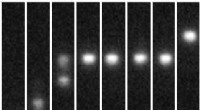
* Twinkling Effect: Because the atmosphere is constantly in motion, the light from a star is constantly being refracted in different ways. This creates the flickering, twinkling effect we see.
Think of it like this: Imagine shining a flashlight through a glass of water with ice cubes in it. The light will bend as it passes through the ice and water, creating a shimmering effect. The same principle applies to starlight passing through our turbulent atmosphere.
Important Note: Planets do not twinkle as much as stars because they are much closer to Earth and appear as larger disks of light. This means the light from a planet is not affected as much by the atmospheric disturbances.