Here's a breakdown:
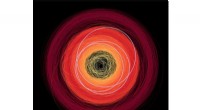
* Circular orbit: A theoretical orbit where the planet maintains a constant distance from the star it orbits. This is a simplified ideal.
* Elliptical orbit: A more realistic shape where the planet's distance from the star varies throughout its orbit. It's like a slightly squished circle, with a point where the planet is closest to the star (perihelion) and a point where it's furthest (aphelion).
Key things to remember about elliptical orbits:
* Kepler's Laws of Planetary Motion: These laws describe the movement of planets around the Sun, and they demonstrate that elliptical orbits are the norm.
* Gravity: The force of gravity between a planet and its star dictates the shape of the orbit. While gravity acts to pull the planet towards the star, the planet's momentum keeps it from falling straight in. The interplay between these forces results in an elliptical path.
While planets have elliptical orbits, some are closer to circular than others. For example, Earth's orbit is slightly elliptical, but it's relatively close to being circular.