Here's why scientists believe Triton might have once been a separate planet:
* Retrograde Orbit: Triton orbits Neptune in a retrograde direction (opposite to Neptune's rotation), which is unusual for a moon. This suggests it was captured rather than forming alongside Neptune.
* High Inclination: Triton's orbit is highly inclined relative to Neptune's equator, further supporting the capture hypothesis.
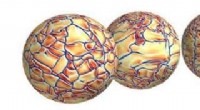
* Geologically Active: Triton exhibits signs of recent geological activity, including cryovolcanoes and a young surface, suggesting a more dynamic history than most moons.
* Similar Composition to Kuiper Belt Objects: Triton's composition, including its nitrogen-rich atmosphere, is similar to Kuiper Belt objects, a region beyond Neptune where dwarf planets like Pluto reside.
These factors have led scientists to theorize that Triton was likely a dwarf planet that was captured by Neptune's gravity billions of years ago. However, the exact details of the capture process are still under debate.