Planets:
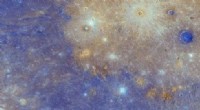
* Mercury: The smallest and innermost planet, known for its extreme temperature variations.
* Venus: The hottest planet in our solar system, with a thick, toxic atmosphere.
* Earth: Our home planet, the only known planet with life.
* Mars: The "Red Planet," with a thin atmosphere and evidence of past liquid water.
* Jupiter: The largest planet in our solar system, a gas giant with a swirling atmosphere.
* Saturn: Known for its beautiful ring system, composed of ice and rock.
* Uranus: An ice giant with a tilted axis, giving it unusual seasons.
* Neptune: The farthest planet from the Sun, also an ice giant with powerful winds.
Other Objects:
* Dwarf Planets: Objects that meet some but not all of the criteria for a planet. These include:
* Pluto: Once considered the ninth planet, now reclassified as a dwarf planet.
* Eris: Slightly larger than Pluto.
* Haumea: An elongated, fast-spinning dwarf planet.
* Makemake: Another relatively large dwarf planet.
* Ceres: The largest object in the asteroid belt.
* Asteroids: Rocky, irregularly shaped objects that orbit the Sun, primarily found in the asteroid belt between Mars and Jupiter.
* Comets: Icy bodies that orbit the Sun in highly elliptical paths, often leaving trails of gas and dust.
* Moons: Natural satellites that orbit planets. Earth has one moon, while other planets have multiple moons.
* Trans-Neptunian Objects (TNOs): Any object that orbits the Sun beyond Neptune. This category includes dwarf planets like Pluto and Eris, as well as smaller bodies.
* Kuiper Belt: A region beyond Neptune that contains many icy bodies, including dwarf planets and comets.
* Oort Cloud: A theoretical spherical cloud of icy objects far beyond the Kuiper Belt, thought to be the source of long-period comets.
Important Note: This list is not exhaustive, as there are many other smaller objects in our solar system, including asteroids, comets, and even dust particles.