Here are a few ways to think about which planets are least alike:
* Composition:
* Gas giants (Jupiter, Saturn, Uranus, Neptune) vs. Terrestrial planets (Mercury, Venus, Earth, Mars): Gas giants are mostly made up of hydrogen and helium, while terrestrial planets are primarily composed of rock and metal. This makes them very different in terms of their structure and density.
* Temperature:
* Venus vs. Neptune: Venus is scorching hot, while Neptune is incredibly cold. This is due to their distances from the Sun and their atmospheric compositions.
* Presence of Life:
* Earth vs. all other planets: Currently, Earth is the only planet known to support life. The others have very different environments that make them unsuitable for life as we know it.
* Magnetic Field:
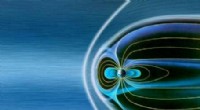
* Mercury vs. Earth: Mercury has a very weak magnetic field compared to Earth, which has a strong and protective field. This makes a huge difference in terms of how the planets interact with the solar wind and cosmic radiation.
Ultimately, the "least alike" planets depend on your point of view. You could argue that Venus and Neptune are the most different based on temperature, or that Earth and Mercury are the most different based on their magnetic fields.
It's interesting to consider all the ways that planets can differ!