Here's why this is:
1. The Formation of the Solar System:
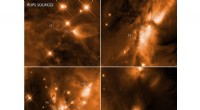
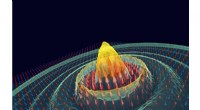
* The Nebular Hypothesis: The prevailing theory is that the solar system formed from a giant rotating cloud of gas and dust called a nebula. As this cloud collapsed under gravity, it spun faster, forming a disk with the Sun at the center.
* Conservation of Angular Momentum: This spinning motion ensured that the material in the disk, which eventually formed planets, inherited a similar rotational direction.
2. Exceptions:
* Venus: Venus rotates retrograde, meaning it spins in the opposite direction of its orbital motion around the Sun. This is likely due to a massive collision early in its history, which flipped its axis.
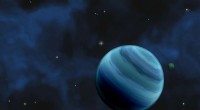
* Uranus: Uranus is tilted on its side, rotating almost perpendicular to its orbital plane. This unusual orientation is likely due to a collision with a large object early in its formation.
3. Not All Stars Have Disk-like Formation:
* While our solar system formed from a rotating disk, some stars might form through different processes, leading to planets with different rotational directions.
4. Evolution and Interactions:
* Over time, gravitational interactions between planets and other objects in the solar system can cause changes in their rotational direction or speed.
In conclusion:
While the initial rotation of the protoplanetary disk set the stage for most planets to rotate in the same direction, there are exceptions caused by collisions or other evolutionary processes. Our solar system is a complex and dynamic place!