* Mercury: While ancient civilizations observed Mercury, no single discoverer is credited. It was known to the Babylonians, Greeks, and other ancient cultures.
* Venus: Like Mercury, no single discoverer is credited. It was known to ancient civilizations due to its brightness and visibility.
* Earth: We don't technically "discover" our own planet, though early civilizations developed sophisticated understandings of its shape, rotation, and place in the cosmos.
* Mars: Again, no single discoverer is credited. It was known to ancient civilizations.
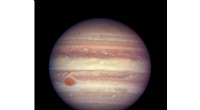
* Jupiter: No single discoverer is credited. It was known to ancient civilizations, including the Babylonians who documented its movements.
* Saturn: Like the others, no single discoverer is credited. It was known to ancient civilizations, with early astronomers making detailed observations of its rings.
* Uranus: William Herschel is credited with discovering Uranus in 1781. He initially believed it was a comet, but further observations revealed its planetary nature.
* Neptune: While astronomers had noticed discrepancies in Uranus's orbit, Urbain Le Verrier and John Couch Adams predicted the existence of another planet based on these discrepancies. Johann Galle then observed Neptune in 1846 using Le Verrier's calculations.
It's important to remember that these discoveries represent the first recorded observations of the planets as distinct celestial bodies. Ancient civilizations were already aware of their existence and tracked their movements in the sky long before these "discoveries."