1. Gravity:
* This is the primary force driving star formation. Gravity pulls matter together, and as more matter accumulates, the gravitational pull strengthens.
* This process is often initiated in large, cold molecular clouds, where the density of matter is high enough for gravity to overcome the internal pressure of the gas.
2. Internal Pressure:
* As matter collapses under gravity, the density and temperature increase. This leads to an increase in internal pressure from the heated gas.
* This pressure acts as a counterforce to gravity, slowing down the collapse.
3. Magnetic Fields:
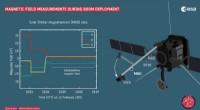
* Molecular clouds often contain magnetic fields, which can influence the collapse by creating pressure that resists gravity.
* However, as the cloud collapses, the magnetic field lines become more compressed and can actually contribute to the fragmentation of the cloud into smaller clumps.
4. Turbulence:
* Turbulence within the cloud can also contribute to the collapse. This turbulence can create shock waves that can compress the gas and increase density, making it easier for gravity to take hold.
5. Rotation:
* Most molecular clouds have some degree of rotation. As the cloud collapses, this rotation will increase, forming a spinning disk.
* This disk can then fragment into smaller clumps that can collapse further to form stars.
The balance between these forces:
* The initial collapse is driven by gravity.
* As the collapse progresses, internal pressure and magnetic fields resist the collapse.
* However, gravity eventually wins, leading to the formation of a protostar.
* Rotation plays a role in shaping the disk and forming planets.
In summary: The accumulation of matter that forms stars is a complex process driven by the interplay of gravity, internal pressure, magnetic fields, turbulence, and rotation. It's a delicate balance of forces that ultimately leads to the creation of these stellar behemoths.