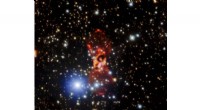
Stars:
* The Main Source: Stars are the primary light producers in the universe. They create light through nuclear fusion, a process where hydrogen atoms fuse together to form helium, releasing immense amounts of energy in the form of light and heat.
Planets:
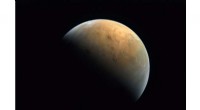
* Reflected Light: Planets themselves don't produce light. They reflect the light from their host star. This is why we see planets in our solar system.
Moons:
* Also Reflected Light: Like planets, moons reflect light from their host star or planet. The Moon, for example, shines because it reflects sunlight.
Nebulae:
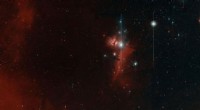
* Glowing Gas: Nebulae are vast clouds of gas and dust. While they don't generate their own light, they are often illuminated by nearby stars. Some nebulae are also energized by the shock waves from supernova explosions, causing them to glow.
Galaxies:
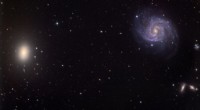
* Collections of Light: Galaxies are vast collections of stars, gas, dust, and dark matter. Their light comes from the combined light of all the stars within them.
Other Objects:
* Supernovae: These powerful explosions of dying stars produce incredibly bright flashes of light.
* Pulsars: These rapidly spinning neutron stars emit beams of radiation (including light) from their magnetic poles.
* Quasars: These extremely distant and luminous objects are powered by supermassive black holes at the centers of galaxies. They emit immense amounts of light and radiation.
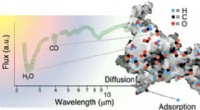
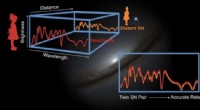
Important Note: Not all light is visible to the human eye. Some objects in space emit light that is in the ultraviolet, infrared, or other wavelengths. Astronomers use special telescopes to detect and study this invisible light.