Here's a breakdown of some common satellite types and their appearance:
Shape:
* CubeSat: These tiny, standardized satellites are often boxy, with a volume of 10x10x10 cm (or larger variations). They are often used for research and educational purposes.
* Cylinder: Some communication satellites have a cylindrical shape, allowing them to rotate and maintain their orientation.
* Panel: Solar panels are often a prominent feature on satellites, giving them a flat, rectangular appearance.
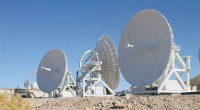
* Dish: Communication and radar satellites often have large, dish-shaped antennas to send and receive signals.
* Irregular: Some scientific satellites have unique, custom-designed shapes to accommodate specific instruments and tasks.
Features:
* Solar panels: These are usually flat, rectangular panels that provide power to the satellite.
* Antennas: These are crucial for communication, ranging in size and shape depending on the satellite's function.
* Instruments: Telescopes, sensors, cameras, and other instruments are often attached to the satellite's body, adding to its complexity.
* Propulsion systems: These systems, including thrusters, allow the satellite to change its orbit or position.
Examples:
* The Hubble Space Telescope: A large, cylindrical telescope with a massive primary mirror.
* International Space Station: A modular, complex structure made up of multiple modules, panels, and robotic arms.
* Communication satellites: These may have a cylindrical or boxy shape, with large dish antennas.
* Weather satellites: These may have cameras, sensors, and antennas mounted on a boxy or cylindrical body.
In summary: A satellite's appearance is dictated by its function and mission. They can be tiny cubes, large cylindrical structures, or complex assemblies with intricate features.
If you're interested in learning more about specific satellites, you can search for images online or visit space agencies' websites like NASA or ESA.