1. The Birth of the Solar System:
* Our solar system began as a massive, rotating cloud of gas and dust called a solar nebula.
* This nebula was not perfectly uniform. It had some initial rotation, even if very slow.
* As the nebula collapsed under gravity, its rotation speed increased. Think of a figure skater spinning faster as they pull their arms in.
2. Conservation of Angular Momentum:
* Angular momentum is a measure of how much an object is rotating. It's a conserved quantity, meaning it remains constant unless acted upon by an external force.
* As the nebula collapsed, its angular momentum remained constant, but the mass was concentrated in a smaller volume. This led to a dramatic increase in the speed of rotation.
3. Disk Formation:
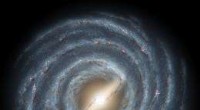
* This rapid rotation flattened the nebula into a disk.
* The Sun formed at the center of this disk, while the planets formed from the remaining material within the disk.
4. Inheriting the Rotation:
* The planets were born from the same rotating disk of gas and dust. Thus, they inherited the same direction of rotation as the disk, which is the same direction as the Sun's rotation.
5. Exceptions:
* While most planets in our solar system revolve in the same direction, there are a few exceptions.
* Venus rotates in the opposite direction (retrograde rotation). This is likely due to a massive impact early in its history.
* Some smaller bodies like comets and asteroids also have retrograde orbits.
Conclusion:
The planets in our solar system revolve around the Sun in the same direction due to the conservation of angular momentum from the initial rotating cloud of gas and dust. This principle of conservation explains why the planets all follow a similar pattern in their motion around the Sun.