1. Nebula Formation: It all starts with a giant cloud of gas and dust called a nebula. These clouds are primarily composed of hydrogen and helium, with trace amounts of heavier elements.
2. Gravitational Collapse: Something triggers the nebula to collapse under its own gravity. This could be a shockwave from a nearby supernova explosion or a gravitational disturbance.
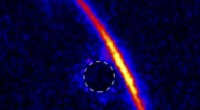
3. Protoplanetary Disk: As the nebula collapses, it spins faster and flattens into a disk-shaped structure called a protoplanetary disk. This disk is hot and contains swirling dust and gas.
4. Dust Grains Accrete: Tiny dust grains in the disk begin to collide and stick together due to electrostatic forces. Over time, these dust grains grow larger and larger, forming planetesimals (small, planet-like bodies).
5. Planetesimals Grow: Planetesimals continue to collide and accrete, sweeping up more material from the disk. This process results in the formation of protoplanets, which are the precursors to planets.
6. Clearing the Neighborhood: As protoplanets grow, their gravity becomes stronger, allowing them to attract more material and clear their orbital paths of smaller objects. This process leads to the formation of the planets we know today.
Key Differences in Planet Formation:
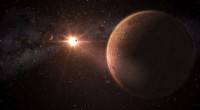
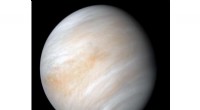
* Inner Planets (Terrestrial Planets): These planets (Mercury, Venus, Earth, Mars) are primarily composed of rock and metal. They formed in the hotter, inner regions of the protoplanetary disk where lighter elements like hydrogen and helium were driven away by solar radiation.
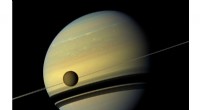
* Outer Planets (Gas Giants): These planets (Jupiter, Saturn, Uranus, Neptune) are composed mainly of hydrogen and helium. They formed in the colder, outer regions of the protoplanetary disk where these lighter elements could condense.
Important Notes:
* Planet formation is a complex process influenced by factors like the initial composition of the nebula, the star's mass, and the presence of other stars.
* The exact details of planet formation are still being studied and debated by scientists.
This is a simplified explanation, but it provides a basic understanding of how planets form.