1. Studying the Solar System's Current State:
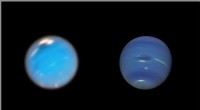
* Composition of Planets and Moons: The different materials that make up the planets and their moons offer clues about where they formed. For example, the inner rocky planets are primarily composed of heavy elements, while the outer gas giants are made mostly of lighter elements like hydrogen and helium. This suggests they formed in different regions of the protoplanetary disk.
* Orbiting Patterns: The planets' orbits are remarkably aligned and nearly circular. This suggests they formed from a spinning disk of gas and dust, rather than a chaotic jumble of material.
* Asteroids and Comets: These leftover bits of material provide snapshots of the early solar system. Their composition and distribution offer insights into the conditions present during the formation process.
2. Observing Other Star Systems:
* Protoplanetary Disks: Telescopes can directly observe disks of gas and dust around young stars, where planets are currently forming. These observations provide real-time evidence of planet formation and help scientists understand the processes involved.
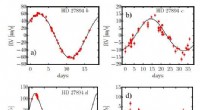
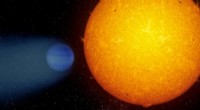
* Exoplanets: The discovery of thousands of planets around other stars allows scientists to study the diversity of planetary systems and compare them to our own. This helps them refine models of planet formation and identify common patterns.
3. Computer Modeling and Simulations:
* Computer models: Scientists use sophisticated computer simulations to model the gravitational interactions and physical processes involved in planet formation. By inputting various initial conditions and physical laws, they can simulate the evolution of protoplanetary disks and the formation of planets.
4. Analyzing Meteorites:
* Primitive meteorites: These are remnants of the early solar system, offering insights into the composition and conditions present billions of years ago. They contain clues about the original cloud of gas and dust from which the solar system formed.
5. Studying the Sun:
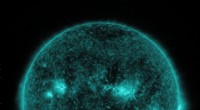
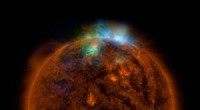
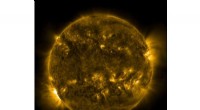
* Solar wind: The Sun's powerful wind can push material away from the solar system. Studying its composition and behavior provides clues about the Sun's evolution and its influence on the formation of planets.
Putting it All Together:
By combining these different pieces of evidence and using careful scientific analysis, scientists can build a consistent picture of how our solar system formed. While there are still many unanswered questions, the evidence suggests that our solar system originated from a massive cloud of gas and dust, and that the planets gradually formed through a complex process of accretion and interaction over millions of years.
It's important to remember that this is an ongoing process of discovery. As technology advances and we learn more about other star systems, our understanding of how our solar system formed will continue to evolve.