1. Stellar Kinematics:
* Rotation Curves: By observing the velocities of stars and gas clouds at different distances from the Galactic center, astronomers can plot the galaxy's rotation curve. The shape of the curve, especially its flatness at large distances, indicates the presence of unseen mass beyond the Sun's orbit.
* Proper Motions: Measuring the tiny sideways movements of stars over time, especially those in the Galactic halo, helps to understand the distribution of mass beyond the Sun's orbit.
2. Gravitational Lensing:
* Microlensing: When a massive object (like a star or a dark matter halo) passes in front of a distant star, its gravity bends the light, causing the distant star to appear brighter for a short time. This "microlensing" effect can be used to estimate the mass of the foreground object.
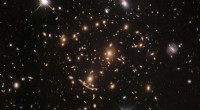
* Strong Lensing: When a very massive object, like a galaxy cluster, bends the light from distant galaxies, creating multiple images of the same galaxy. The pattern of the lensed images can be used to estimate the mass of the lensing object.
3. Satellite Dynamics:
* Dwarf Galaxy Orbits: The orbits of dwarf galaxies around the Milky Way are affected by the distribution of mass in the galaxy. Observing the orbits of these dwarf galaxies can constrain the total mass of the Milky Way.
* Globular Clusters: The motion of globular clusters around the galaxy provides information about the gravitational potential of the Milky Way, which is influenced by the distribution of mass, including dark matter.
4. Other Techniques:
* Cosmic Microwave Background: Analyzing the patterns in the cosmic microwave background radiation can provide information about the distribution of matter in the early universe. This can be used to infer the amount of dark matter in the Milky Way.
* Simulations: Computer simulations of galaxy formation and evolution help to understand the distribution of dark matter in galaxies like the Milky Way. These simulations can be compared to observational data to refine our understanding of the Milky Way's mass.
Challenges and Uncertainties:
* Dark Matter: A significant portion of the Milky Way's mass is believed to be dark matter, which does not emit light and can only be detected through its gravitational influence. Determining the distribution of dark matter is challenging.
* Gas and Dust: The interstellar medium (gas and dust) can obscure our view of the galaxy and complicate measurements.
* Model Dependencies: Many of the techniques rely on assumptions about the distribution of mass and the physics involved. These assumptions can introduce uncertainties into the estimated mass.
Current Estimates:
While the exact value is still debated, estimates of the Milky Way's mass outside the Sun's orbit typically range from 1-2 trillion solar masses. This mass is dominated by dark matter, with stars and gas contributing a smaller fraction.
Research is ongoing to refine our understanding of the Milky Way's mass and the distribution of dark matter within it. Future observations and theoretical advances will continue to improve our knowledge of this fundamental property of our galaxy.