1. Exoplanets and Stellar Evolution:
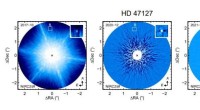
* Exoplanet discoveries: The thousands of exoplanets discovered in recent decades have provided a wealth of data about planetary systems around other stars. This data has led to a deeper understanding of how stars influence the formation and evolution of planets, and vice versa. For example, we are learning about the diverse range of planetary systems, the prevalence of "hot Jupiters," and the impact of stellar activity on planetary atmospheres.
* Stellar evolution and star clusters: Observations of star clusters, especially young ones, have helped us refine our models of stellar evolution. We are learning about the different stages of star formation, the evolution of stars with different masses, and the eventual fate of stars (including supernovae and white dwarfs).
2. Stellar Atmospheres and Interior:
* High-resolution spectroscopy: Advancements in spectroscopy allow us to study the chemical composition of stars with unprecedented detail. This has led to a deeper understanding of the processes occurring within stellar atmospheres and interiors, like nuclear fusion and the transport of energy.
* Helioseismology: Just as seismology studies the Earth's interior through seismic waves, helioseismology uses the vibrations of the Sun to probe its internal structure. This has provided valuable information about the Sun's internal rotation, the structure of its convection zone, and the properties of its core.
3. Stellar Magnetism and Activity:
* Space-based telescopes: Telescopes like the Hubble Space Telescope and the Chandra X-ray Observatory have allowed us to study stellar activity (like flares, coronal mass ejections, and magnetic cycles) in unprecedented detail. This has led to a better understanding of the interaction between stellar magnetism and stellar winds, and how these phenomena affect planetary habitability.
4. Black Holes and Stellar Death:
* Gravitational wave astronomy: The detection of gravitational waves from merging black holes and neutron stars has revolutionized our understanding of these extreme objects. This has helped us understand the final stages of stellar evolution and the role of black holes in the universe.
* Supernova remnants: Studying the remnants of supernova explosions has provided clues about the processes that occur during these events, including the creation of heavy elements and the possible formation of black holes.
5. Stellar Physics and Theory:
* Computer simulations: Advanced computer simulations allow us to model stellar interiors and evolution with greater accuracy. These simulations help us test and refine existing theories and predict the behavior of stars under various conditions.
* Neutrino astronomy: The study of neutrinos emitted by stars has provided a unique window into their interiors. This has helped us understand the processes of nuclear fusion and the transport of energy within stars.
It's important to note that these are just a few examples of areas where new evidence has advanced our understanding of stars. The field of astronomy is constantly evolving, and new discoveries and advancements are being made all the time.