* Most common stars: The most common type of star in the universe is called a red dwarf. They're much smaller and cooler than our Sun, with diameters ranging from about 0.1 to 0.5 times the Sun's diameter. So, think of a red dwarf as a tiny ball of fire, compared to the Sun's blazing sphere.
* Our Sun: Our own Sun is a yellow dwarf. It's considered a medium-sized star, with a diameter of about 1.4 million kilometers (865,000 miles).
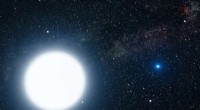
* Giant stars: Some stars are much larger than our Sun. These are called giants and supergiants. Giant stars can be 10 to 100 times larger than our Sun, while supergiants can be hundreds or even thousands of times larger.
Here's the catch: While red dwarfs are the most numerous, the biggest stars are the ones we tend to notice and admire. They're just so incredibly massive that they dominate the visual landscape of the night sky.
Here's an analogy: Imagine you're walking through a forest. There are tons of small trees, but you're more likely to notice the few giant redwoods that tower above them. It's the same with stars: The "giants" are visually impressive, even though the "red dwarf" stars are far more common.