1. Relative Position of Planets and Other Objects in the Solar System:
This refers to the orbital positions of planets, dwarf planets, asteroids, comets, and other objects around the Sun. This position is usually described using:
* Orbital distance: How far away an object is from the Sun at a given time.
* Orbital inclination: The angle of an object's orbit relative to the plane of the Earth's orbit (the ecliptic).
* Orbital eccentricity: How much an object's orbit deviates from a perfect circle.
* Longitude of perihelion: The point in an object's orbit where it is closest to the Sun.
2. Relative Position of Earth to the Sun:
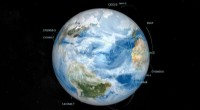
This refers to the Earth's position in its orbit around the Sun, which causes the seasons. The Earth is tilted on its axis, and as it orbits the Sun, different hemispheres are tilted towards the Sun at different times of the year.
3. Relative Position for Solar Energy:
This refers to the angle of the Sun in the sky, which affects the intensity of sunlight received at a particular location. This is important for solar energy applications.
4. Relative Position for Astronomical Observations:
This refers to the position of an object in the sky relative to the Sun. This is important for astronomers to plan their observations, as the Sun's glare can interfere with observations.
To give a more specific answer, please tell me:
* What are you trying to understand?
* What is the context of your question?
* Are you asking about a particular object, like a planet, a spacecraft, or a specific location on Earth?
Once I have more information, I can provide a more helpful and specific answer.