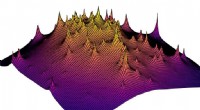
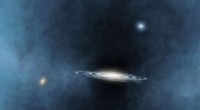
* Galactic clusters come in different sizes: Just like cities vary in population, galactic clusters vary in size. Some are small, containing only a few dozen galaxies, while others are massive, containing thousands.
* Fuzzy boundaries: Galactic clusters don't have well-defined edges. Galaxies are spread out, and the density of galaxies gradually decreases as you move away from the center of the cluster.
* Different definitions: Scientists use various methods to define the size of a cluster. Some use the radius containing 50% of the cluster's mass, while others use the radius encompassing a certain density of galaxies.
To get a specific radius, you'd need to specify which cluster you're interested in and how you want to define its size.
For example, the Virgo Cluster, which is the closest large cluster to our Milky Way, has a radius of about 10 million light-years if we define it as the region containing most of the cluster's galaxies. However, other definitions might yield different radii.
In summary, the radius of a galactic cluster is not a fixed value but depends on the specific cluster and how we define its boundaries.