Landforms on other planets:
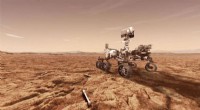
* Mars: Volcanoes (Olympus Mons, the largest in the solar system), canyons (Valles Marineris, the largest in the solar system), deserts, polar ice caps, riverbeds (suggesting past liquid water).
* Venus: Volcanoes (hundreds of thousands!), vast plains, mountains, and a thick atmosphere that creates intense surface pressure and heat.
* Mercury: Craters from asteroid impacts, cliffs, plains, and evidence of volcanic activity.
* Jupiter: While it's a gas giant, it has a swirling atmosphere with giant storms (like the Great Red Spot), bands of different colors, and potentially a solid core.
* Saturn: Similar to Jupiter, Saturn has a swirling atmosphere with storms and bands. It also has rings made up of ice and rock particles.
* Uranus and Neptune: Both are ice giants with swirling atmospheres, storms, and unique magnetic fields.
Landforms on moons:
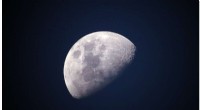
* Moon: Craters, maria (dark, smooth plains formed by ancient volcanic eruptions), mountains, and highlands.
* Europa (Jupiter's moon): A smooth, icy surface with evidence of a subsurface ocean, potentially harboring life.
* Titan (Saturn's moon): The only moon with a dense atmosphere, lakes of methane, and potential volcanoes spewing ice.
* Enceladus (Saturn's moon): A geologically active moon with ice volcanoes that shoot out jets of water vapor.
* Io (Jupiter's moon): The most volcanically active body in our solar system with giant volcanoes erupting sulfur and lava.
Beyond planets and moons:
* Asteroids: Many asteroids have craters, ridges, and other features resulting from collisions and geological processes.
The exploration of these landforms helps us understand the formation and evolution of our solar system, and perhaps even find signs of past or present life elsewhere.