Here's a breakdown:
* Gravity is a fundamental force: It's one of the four fundamental forces in the universe, alongside electromagnetism, the strong nuclear force, and the weak nuclear force.
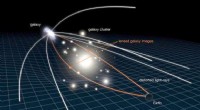
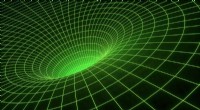
* Mass creates gravity: Every object with mass, from tiny particles to massive stars, exerts a gravitational pull on everything else around it.
* The more mass, the stronger the pull: Larger objects with more mass have a stronger gravitational pull than smaller objects.
* Stars are incredibly massive: Stars are huge balls of hot gas, containing immense amounts of mass. This mass generates a powerful gravitational field.
The effect of gravity on stars:
* Holding the star together: The immense gravity of a star is what keeps it from exploding outward due to the intense internal pressure.
* Fusion reactions: Gravity compresses the star's core, leading to the extreme temperatures and pressures needed for nuclear fusion to occur.
* Evolution of stars: The gravity of a star determines its life cycle, influencing its lifespan, size, and eventual fate.
In essence, stars have gravity because of their mass, and this gravity is a crucial factor in their formation, structure, and evolution. It's not an act, but a natural and inherent property of massive objects.