* Jupiter is a gas giant: It's not a solid planet with a surface. It's composed primarily of hydrogen and helium, with trace amounts of other elements. The gases gradually become denser as you go deeper, but there's no distinct surface to land on.
* Extreme atmospheric pressure: As you descend into Jupiter's atmosphere, the pressure increases dramatically. At some point, the pressure would be so immense that it would crush any spacecraft or object.
* Lack of a solid core: While Jupiter likely has a solid core, it's hidden beneath layers of extremely dense gas. We've never been able to reach it with spacecraft.
What can we do instead?
While we can't land on Jupiter, we can send probes through its atmosphere.
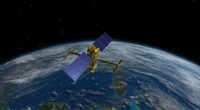
* Juno Mission: NASA's Juno spacecraft is currently orbiting Jupiter and collecting data about its atmosphere, magnetic field, and composition.
* Galileo Probe: NASA's Galileo probe descended into Jupiter's atmosphere in 1995 and sent back data before being crushed by the pressure.
So, while it's impossible to land on Jupiter, we can still explore it and learn about its mysteries through space missions!