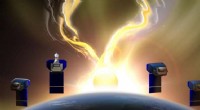
1. Energy source: These nebulae are energized by nearby hot, massive stars. These stars emit a large amount of ultraviolet (UV) radiation.
2. Ionization: The UV radiation from the stars interacts with the gas in the nebula, stripping electrons from the atoms, creating ions (positively charged atoms). This process is called ionization.
3. Recombination: The ionized electrons eventually recombine with the ions. As the electrons fall back into lower energy levels, they emit photons of light.
4. Emission lines: This light is not a continuous spectrum, but rather specific wavelengths corresponding to the energy level transitions in the atoms. This creates the characteristic emission lines that give these nebulae their vibrant colors.
Why are they so bright?
* High density of ionized gas: The process of ionization creates a high concentration of excited atoms, which means a lot of light is emitted.
* Large volume: Ionization nebulae can be vast, spanning light-years across. The sheer volume of emitting gas amplifies the brightness.
* Energetic UV radiation: The energy from the stars is very intense, leading to a high rate of ionization and recombination, further boosting the brightness.
Examples of Ionization Nebulae:
* The Orion Nebula: A famous example of an emission nebula, energized by the Trapezium cluster of hot stars.
* The Lagoon Nebula: Another prominent emission nebula, known for its red glow and dark dust lanes.
* The Trifid Nebula: Named for its three "lobes," it displays a mixture of red emission and blue reflection nebula characteristics.
In summary, the combination of intense energy from hot stars, the ionization of gas, and the subsequent recombination of electrons with ions results in the spectacular brightness of ionization nebulae. They are truly cosmic beacons of light.