* Planet size is relative: What's considered "large" depends on what you're comparing it to. Jupiter is the largest planet in our solar system, but compared to some exoplanets, it's relatively small!
* Different classifications: We categorize planets based on their composition (gas giants, ice giants, terrestrial planets) rather than just their size.
However, you can use these terms to describe large planets:
* Gas Giants: These are the biggest planets, primarily composed of hydrogen and helium (like Jupiter and Saturn).
* Ice Giants: While smaller than gas giants, these planets are still quite large and primarily composed of heavier elements like oxygen, carbon, and nitrogen (like Uranus and Neptune).
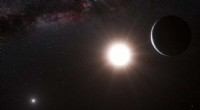
* Super-Earths: These are exoplanets that are larger than Earth but smaller than gas giants.
So, while there isn't a one-word answer, you can use these terms to describe large planets based on their specific properties.