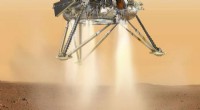
Overall Appearance:
* Reddish-brown color: Mars is nicknamed the "Red Planet" due to its rusty-red hue. This color comes from iron oxide (rust) in its soil and rocks.
* Dusty and barren: The surface is largely covered in dust and rocks, with very little vegetation or liquid water.
* Thin atmosphere: Mars has a very thin atmosphere, about 100 times thinner than Earth's, making it difficult for liquid water to exist on the surface.
Surface Features:
* Volcanoes: Mars has the largest volcano in the solar system, Olympus Mons, which is three times taller than Mount Everest. Other volcanoes like Ascraeus Mons and Pavonis Mons are also impressive.
* Canyons: Valles Marineris, the largest canyon in the solar system, is over 2,500 miles long and up to 4 miles deep.
* Polar ice caps: Mars has permanent ice caps at its poles, composed of frozen water and carbon dioxide.
* Impact craters: The surface of Mars is dotted with craters, some of which are very large.
* Dry riverbeds: Evidence of past liquid water exists in the form of dry riverbeds, suggesting that Mars once had a warmer and wetter climate.
How it appears from Earth:
* Reddish star: When viewed from Earth, Mars appears as a reddish star, although its brightness varies depending on its position in its orbit.
* Telescope views: Through a telescope, you can see some of Mars' surface features, like the polar ice caps.
Overall, Mars is a fascinating planet with a striking appearance. Its reddish color, dusty surface, and diverse features make it a captivating object of study for scientists and space enthusiasts alike.