Telescopes (for Light)
* Optical Telescopes: These are the most common type, collecting visible light.
* Refracting Telescopes: Use lenses to focus light.
* Reflecting Telescopes: Use mirrors to focus light.
* Radio Telescopes: Capture radio waves emitted by celestial objects.
* Infrared Telescopes: Observe infrared radiation, useful for studying cool objects like dust clouds and planets.
* Ultraviolet Telescopes: Observe ultraviolet light, revealing hot, energetic objects and processes.
* X-ray Telescopes: Detect X-rays, often emitted from high-energy events like black holes and supernovae.
* Gamma-Ray Telescopes: Observe the highest energy light, from extremely energetic events like gamma-ray bursts.
Other Instruments
* Spectrographs: Break light down into its component colors (spectrum), revealing the composition and motion of celestial objects.
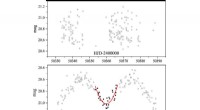
* Photometers: Measure the brightness of objects in different wavelengths.
* Interferometers: Combine signals from multiple telescopes to create a much larger effective telescope, improving resolution.
* Cameras: Capture images of celestial objects, often used in conjunction with telescopes.
* Satellites: Provide continuous observations from above Earth's atmosphere, free from interference.
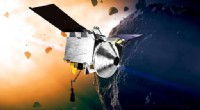
* Spacecraft: Visit planets and other objects in our solar system, offering close-up observations.
* Ground-Based Observatories: Houses telescopes and other instruments, often located in remote areas with clear skies.
Specialized Instruments
* Astrobiology Instruments: Designed to search for signs of life on other planets, such as those that analyze soil or atmosphere samples.
* Gravitational Wave Detectors: Detect ripples in spacetime caused by massive events like colliding black holes.
The Future
* Next-Generation Telescopes: New telescopes like the James Webb Space Telescope (infrared) and the Extremely Large Telescope (optical/infrared) promise to revolutionize our understanding of the universe.
Remember: The study of the sky is constantly evolving, with new technologies and instruments being developed all the time!