Here's a breakdown of different types of telescopes and their uses:
* Optical Telescopes: These are the most common type of telescope, using lenses or mirrors to collect and focus visible light. They come in various sizes, from small backyard telescopes to massive observatories like the Keck Telescopes.
* Radio Telescopes: These telescopes detect radio waves emitted by stars, which can reveal information about their internal structure, magnetic fields, and the composition of the gas surrounding them.
* Infrared Telescopes: These telescopes observe infrared radiation, which can penetrate dust clouds and allow scientists to study the birth of stars and the formation of planets.
* Ultraviolet Telescopes: These telescopes detect ultraviolet radiation, which is emitted by hot stars and can reveal information about their temperature and composition.
* X-ray Telescopes: These telescopes detect X-rays, which are emitted by very hot and energetic objects, including black holes and neutron stars.
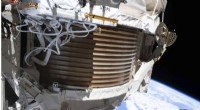
* Gamma-ray Telescopes: These telescopes detect gamma rays, the highest-energy form of light. They can help us study the most extreme events in the universe, such as supernova explosions and the formation of black holes.
In addition to telescopes, scientists also use a variety of other tools to study stars, including:
* Spectrographs: These instruments break starlight into its component colors, allowing scientists to analyze the chemical composition of stars.
* Photometers: These instruments measure the brightness of stars, which can reveal information about their size, temperature, and distance.
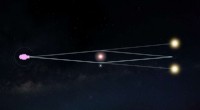
* Interferometers: These instruments combine the light from multiple telescopes to create a much larger effective telescope, allowing scientists to achieve higher resolution images.
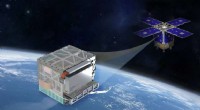
* Spacecraft: Some spacecraft are specifically designed to observe stars, such as the Hubble Space Telescope, which has provided stunning images of distant galaxies and nebulae.
These tools allow scientists to gather vast amounts of data about stars, helping us understand their evolution, their role in the universe, and the origins of life itself.