1. Nanoflares: These are miniature explosions on the Sun's surface that release small bursts of energy. While each nanoflare is relatively weak, there are likely countless occurring constantly, and their combined energy could be enough to heat the corona.
2. Alfvén waves: These are magnetic waves that propagate through the Sun's atmosphere. As these waves travel upwards, they can transfer energy to the corona and chromosphere, heating them.
3. Magnetic Reconnection: This is a process where magnetic field lines intertwine and then separate, releasing tremendous amounts of energy. This process can occur on a large scale, like during solar flares, but also on a much smaller scale, potentially contributing to the heating of the corona.
4. Other Potential Mechanisms: Other possibilities include:
* Wave Turbulence: Waves in the Sun's atmosphere can interact and create turbulent flows, transferring energy to the corona.
* Magnetic Waves from Sunspots: Sunspots are areas of intense magnetic activity. Waves generated within sunspots could travel up through the atmosphere, contributing to the heating of the corona.
The Challenge:
The challenge in understanding the heating mechanisms of the corona and chromosphere lies in:
* Direct Observation: These layers of the Sun are extremely hot and difficult to observe directly with telescopes.
* Multiple Mechanisms: It's likely a combination of these mechanisms, with different ones dominating at different times and locations.
* Complex Physics: The interactions of magnetic fields, plasma, and waves in the Sun's atmosphere are complex and difficult to model.
Ongoing Research:
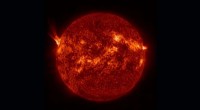
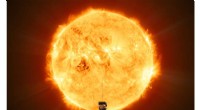
Scientists continue to study the Sun and its atmosphere with sophisticated instruments like the Solar Dynamics Observatory (SDO) and the Parker Solar Probe. These missions are providing valuable data that is helping to refine our understanding of the processes that heat the corona and chromosphere.