1. Direct Imaging:
* Circumstellar Disks: Telescopes like the Hubble Space Telescope, Atacama Large Millimeter/submillimeter Array (ALMA), and the James Webb Space Telescope have directly imaged protoplanetary disks around young stars. These disks are visible in infrared and submillimeter wavelengths due to the dust and gas they contain.
* Gaps and Rings: Some disks exhibit gaps and rings, which are thought to be carved out by forming planets. The gaps can be seen in scattered light from the disk, while the rings are often visible in dust emission.
2. Spectroscopy:
* Spectral Signatures: Spectroscopic observations reveal the presence of specific molecules in protoplanetary disks, such as water, carbon monoxide, and silicates. These molecules are crucial building blocks for planets.
* Doppler Shifts: Measuring the Doppler shift of spectral lines in a disk can indicate the presence of planets orbiting the star, as the planet's gravity perturbs the disk's rotation.
3. Polarization:
* Scattered Light: The light from a protoplanetary disk can be polarized as it scatters off dust particles. This polarization pattern provides information about the disk's structure and the presence of clumps of dust, which may be indicative of planet formation.
4. Accretion:
* Mass Accretion: Observations show that young stars are still accreting material from their disks, a process known as accretion. This material is likely the fuel for planet formation.
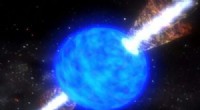
* Jets and Outflows: Many young stars exhibit strong jets and outflows, which are believed to be powered by accretion from the disk. These outflows can shape and sculpt the disk.
5. Statistical Evidence:
* Exoplanet Abundance: The discovery of thousands of exoplanets across a variety of ages and sizes strengthens the case for planet formation in disks. The statistical distribution of exoplanets provides insights into the typical conditions and processes in protoplanetary disks.
6. Theoretical Models:
* Disk Evolution Models: Computer simulations of disk evolution have been developed to understand the physical processes involved in planet formation. These models are informed by observations and provide predictions that can be tested.
In Summary:
The combination of these observational and theoretical approaches provides strong evidence for the existence of protoplanetary disks and the formation of planets within them. The ongoing exploration of these disks using powerful telescopes like the James Webb Space Telescope will continue to refine our understanding of planet formation and the processes that shape planetary systems.