Composition:
* Primarily Hydrogen and Helium: All stars are primarily composed of hydrogen and helium, with trace amounts of heavier elements.
* Nuclear Fusion: Stars generate energy through nuclear fusion, converting hydrogen into helium in their cores.
Formation:
* Nebular Collapse: Stars form from the gravitational collapse of giant clouds of gas and dust called nebulae.
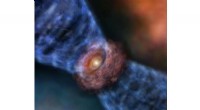
* Protostar Stage: Before becoming a star, a protostar forms, gathering mass and heating up.
Structure:
* Core: The hot, dense core is where nuclear fusion occurs.
* Radiative Zone: Energy from the core travels outward through radiation.
* Convective Zone: In some stars, energy is transported by convection, where hot material rises and cooler material sinks.
* Photosphere: This is the visible surface of a star, where light is emitted.
* Chromosphere: A layer above the photosphere, often visible during solar eclipses.
* Corona: The outermost layer of a star's atmosphere, extending far into space.
Life Cycle:
* Main Sequence: Stars spend most of their lives on the main sequence, fusing hydrogen into helium.
* Red Giant/Supergiant: After exhausting their hydrogen fuel, stars expand into red giants or supergiants.
* Evolutionary Paths: Stars evolve through various stages depending on their initial mass.
* Death: Stars eventually reach the end of their lives, either as white dwarfs, neutron stars, or black holes.
Gravity:
* Gravity's Role: Gravity is crucial to a star's formation, structure, and stability. It holds the star together against the outward pressure of nuclear fusion.
Light Emission:
* Blackbody Radiation: Stars emit light as a blackbody, with a specific spectrum of colors based on their temperature.
* Spectral Classification: Astronomers classify stars based on their spectra, which reveal information about their temperature, composition, and motion.
While stars have these similarities, they also vary in many ways, such as mass, size, temperature, color, and luminosity. These differences influence their evolution and lifetimes.