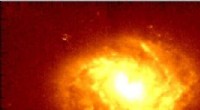
Red Giant Phase:
* Red: As a star exhausts its hydrogen fuel, it expands and cools, becoming a red giant. This is why we see stars like Betelgeuse as red.
White Dwarf Phase:
* White: After shedding its outer layers, a low-mass star collapses into a white dwarf, which is very hot but small. It will eventually cool down and become a black dwarf (which hasn't been observed yet).
Supernova:
* Multiple Colors: A supernova explosion is incredibly bright and can emit light across the entire spectrum, appearing very colorful. This is due to the intense heat and the rapid expansion of the star's outer layers.
Other Considerations:
* Composition: The composition of the star can also affect its color. Stars with heavier elements tend to be more red, while stars with lighter elements tend to be bluer.
* Distance: The distance of a star can also affect its apparent color. Stars that are farther away appear redder due to the redshift effect.
In summary:
* A dying star can be red, white, or multi-colored, depending on its mass, stage of death, and other factors.