* Composition: Outer planets are primarily composed of hydrogen and helium, the lightest elements in the universe. These elements are much less dense than the heavier elements like iron, nickel, and silicon that make up the inner planets.
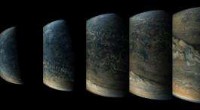
* Gas Giants: Jupiter and Saturn are gas giants, meaning they have no solid surface. Their atmospheres are incredibly thick and extend far beyond their core. This vast expanse of gas contributes to their low density.
* Ice Giants: Uranus and Neptune, while not entirely gaseous, are still primarily composed of volatile compounds like water, methane, and ammonia. These compounds, though not as light as hydrogen and helium, are still much less dense than the rocky materials found in inner planets.
* Lower Gravity: The outer planets, due to their lower mass, have weaker gravitational pull compared to inner planets. This weaker gravity does not compress the material as much, further contributing to their lower density.
An analogy: Imagine a balloon filled with air. The balloon itself is light, but the air inside makes it appear larger and less dense. Similarly, the outer planets, with their vast atmospheres and light elements, are less dense compared to the solid, rocky inner planets.
It's important to note that density isn't a simple measure of how "heavy" something is. It's a measure of how much mass is packed into a given volume. While the outer planets have much more mass than inner planets, their vast size spreads that mass out, resulting in lower density.