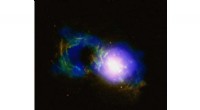
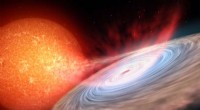
1. They have nothing to do with planets: While early astronomers thought these objects resembled planets through their telescopes, we now know they are expanding shells of gas ejected from dying stars.
2. They are not nebulae in the traditional sense: A nebula is typically a cloud of gas and dust in space. While planetary nebulae contain gas, they are actually the result of a star's death, not a cloud of material waiting to form stars.
Here's a breakdown of why the term is misleading:
* Appearance: The early astronomers who named these objects saw them as small, round, and faint, similar to how planets might appear. However, the appearance of these objects is a result of our limited viewing technology at the time. Modern telescopes reveal them as complex and intricate structures.
* Origin: Planetary nebulae are formed by the ejection of a star's outer layers as it transitions into a white dwarf. They are not clouds of interstellar gas, but rather the remnants of a dying star.
* Composition: Planetary nebulae are mostly composed of ionized gas, particularly hydrogen and helium. While traditional nebulae also contain gas, they also have dust particles, which are not present in planetary nebulae.
Therefore, while the term "planetary nebula" is still used, it is understood to be an inaccurate description of these fascinating objects. More accurate terms might include "stellar remnant" or "ejected stellar envelope."