1. The Sun:
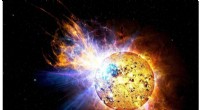
- A massive star that dominates the solar system and provides the gravitational force that holds everything in orbit.
- It comprises about 99.86% of the solar system's mass.
2. Inner Solar System:
- Consists of the four rocky planets closest to the Sun:
- Mercury: The smallest planet and closest to the Sun.
- Venus: The hottest planet in the solar system due to a dense atmosphere.
- Earth: The only known planet to harbor life.
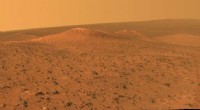
- Mars: A reddish planet with a thin atmosphere and evidence of past water.
- Contains the Asteroid Belt: A region between Mars and Jupiter filled with asteroids, remnants from the early solar system.
3. Outer Solar System:
- Home to the gas giants:
- Jupiter: The largest planet in the solar system, with a massive atmosphere primarily composed of hydrogen and helium.
- Saturn: Known for its spectacular ring system.
- Uranus: A blue-green planet tilted on its side.
- Neptune: The farthest planet from the Sun, with a very cold and windy atmosphere.
- Also contains the Kuiper Belt: A region beyond Neptune populated by icy bodies, including dwarf planets like Pluto.
- Extends further out to the Oort Cloud: A spherical region of icy debris, considered the source of long-period comets.
Additional components:
- Moons: Natural satellites that orbit planets. Some planets have dozens of moons, each with its own unique characteristics.
- Rings: Flat disks of dust and ice particles orbiting planets. Saturn is famous for its rings, but Jupiter, Uranus, and Neptune also have rings.
- Comets: Icy bodies that orbit the Sun in highly elliptical paths. They can produce spectacular tails as they get close to the Sun.
- Interplanetary medium: The space between planets filled with a thin gas and dust.
The solar system's structure is dynamic:
- The planets are constantly moving around the Sun in elliptical orbits.
- The interactions between planets and other celestial bodies cause changes in their orbits and positions over long periods.
- The solar system is still evolving, with new discoveries being made all the time.
Important points to remember:
- The solar system is not a perfect disk; the planets' orbits are slightly tilted.
- The distances between planets are vast.
- The solar system is just one of billions in the Milky Way galaxy.