Here's a breakdown of what it was like:
* Composition: Primarily hydrogen and helium, with traces of heavier elements like carbon and oxygen.
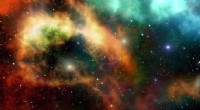
* Appearance: It wouldn't have been visible to the naked eye. It would have been a vast, cold, and dark region of space.
* Size: Much larger than our current solar system.
* Temperature: Very cold, around -260 degrees Celsius (-436 degrees Fahrenheit).
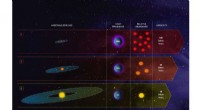
This cloud was not static. The particles within it were constantly moving. Gravity caused them to gradually pull together, and as they did, the cloud:
* Became denser: The particles got closer together.
* Heated up: Collisions between particles generated heat.
* Spun faster: Conservation of angular momentum meant the cloud spun faster as it contracted.
Finally, at the center of this collapsing cloud, the temperature and pressure reached a critical point. At this point, nuclear fusion ignited, and the cloud became a star - our Sun.
So, while our sun didn't "look" like anything before it was a star, it was a massive, swirling, and gradually shrinking cloud of gas and dust. This process, known as star formation, is a constant occurrence throughout the universe, creating new stars all the time.