Star System:
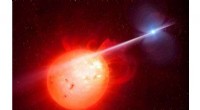
* General term: Refers to any system of stars and other celestial objects bound together by gravity.
* Focuses on stars: Emphasizes the presence of one or more stars as the central gravitational body.
* Broader scope: Includes systems with multiple stars (binary, ternary, etc.) and various types of objects orbiting them, such as planets, moons, asteroids, comets, and even other stars.
Solar System:
* Specific term: Refers specifically to the system of planets and other objects that orbit the Sun.
* Focuses on our Sun: Centers around our Sun as the central star.
* Narrower scope: Limited to the celestial objects orbiting our particular star.
Here's a table summarizing the key differences:
| Feature | Star System | Solar System |
|---|---|---|
| Definition | Any system of stars and objects bound by gravity | The system of planets and objects orbiting the Sun |
| Focus | Stars | Our Sun |
| Scope | Includes all types of systems with multiple stars and objects | Limited to the objects orbiting our Sun |
In essence:
* Every solar system is a star system, but not every star system is a solar system.
* The term "star system" is more general and encompasses a wider range of celestial arrangements.
* "Solar system" specifically refers to our own system, centered around our Sun.