1. Solar System Movement:
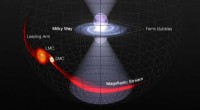
* Orbiting the Milky Way: The Sun, along with all the planets in our solar system, orbits the center of the Milky Way galaxy. This journey takes about 225-250 million years to complete.
* Local Interstellar Cloud: Our Sun is currently traveling through a region of space called the "Local Interstellar Cloud." This cloud is a region of relatively low-density gas and dust.
2. Galactic Movement:
* Rotation within the Milky Way: The Milky Way itself is rotating, carrying our Sun and its solar system along for the ride.
* Movement relative to other stars: Our Sun is not stationary within the Milky Way. It moves relative to other stars in its vicinity.
3. Cosmic Expansion:
* The Universe is Expanding: The fabric of space itself is expanding, meaning galaxies (including the Milky Way) are moving further apart. This expansion is driving the Sun's movement relative to distant galaxies.
4. "Peculiar Motion":
* Motion due to Gravity: The Sun is influenced by the gravitational pull of other nearby stars and the Milky Way's overall gravitational field. This influence causes our Sun to have a slightly "peculiar motion" that is not strictly due to the galactic rotation or expansion.
In summary:
Our Sun is constantly moving due to a combination of factors: its orbit around the Milky Way, the galaxy's own rotation, the expansion of the universe, and gravitational interactions with other stars.